


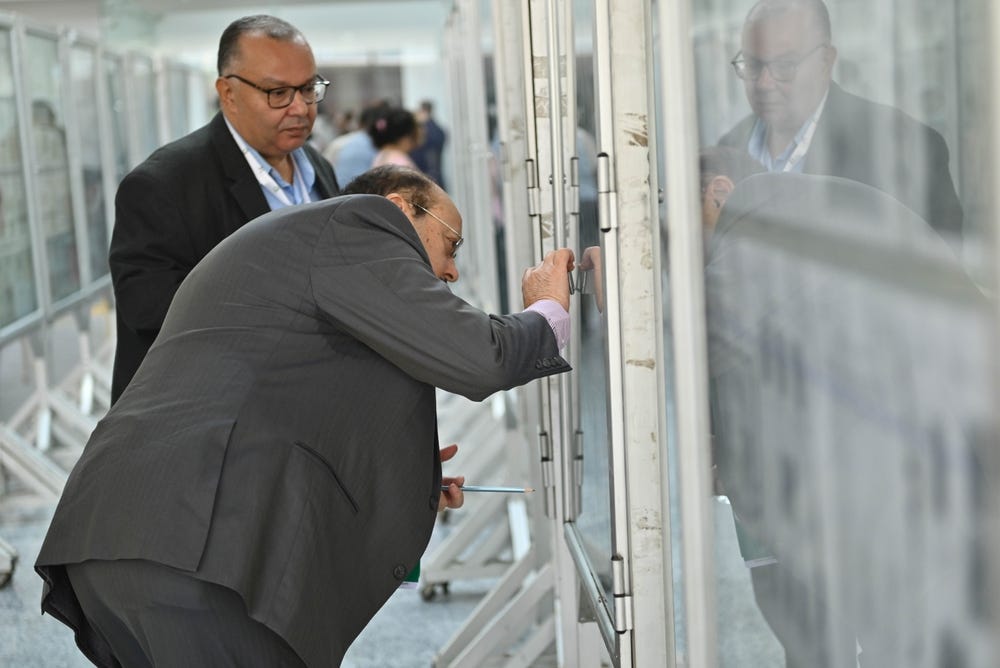
On January 27, 2026, Egypt’s Court of Cassation issued a ruling that the state then kept confidential for almost three months. The ruling overturned a 2020 Family Court decision that had recognized the marriage of an Egyptian Bahá’í couple who had been married since September 1981, forty-five years. The Egyptian public learned of the ruling in mid-April, when activists noticed that married Bahá’ís renewing their identity cards were being recorded as single.
Article 2 of the Egyptian Constitution establishes Sharia as the principal source of legislation. Article 64 guarantees the freedom of religious rites only for adherents of the three heavenly religions, Islam, Christianity, and Judaism. Marriage is a religious rite. Bahá’ís are not adherents of a heavenly religion. Their marriages are therefore outside the legal framework that recognizes marriage at all.
A Bahá’í couple cannot register their marriage. Their children’s parentage is legally ambiguous. Pensions and inheritance pass through formal recognition that does not exist. Non-Egyptian spouses of Egyptian Bahá’ís cannot obtain family residency. Egyptian Bahá’í mothers cannot pass their citizenship to children they have with non-Egyptians, a right the state grants to every other Egyptian woman. The Bahá’í citizen is a citizen with the legal status of a stateless person inside his own country.
This ruling is the latest episode in a pattern that has run through the Egyptian state for almost a century. In 1948, the Egyptian Jewish community numbered approximately 80,000 people, descended from communities documented in Alexandria and Cairo since the Hellenistic period. After the founding of Israel, and especially after the Suez Crisis of 1956, the Nasser regime conducted a systematic campaign of dispossession, confiscation of property, revocation of citizenship, mass expulsions framed alternately as voluntary departures and as security measures. After 1967, the residual community was effectively eliminated. By 1970, fewer than a thousand Jews remained. Today, the Egyptian Jewish community of antiquity exists in diaspora.
The Copts, the descendants of the pre-Islamic Christian population, whose church traces its founding to Saint Mark in the first century, six hundred years before the Arab conquest of 641 CE, were the majority of the Egyptian population at the time of the conquest. They are now estimated at roughly 10 percent. Coptic numerical decline across fourteen centuries has been the product of jizya pressure, social marginalization, intermittent violence, and the steady administrative friction of life as a tolerated minority. The friction has not stopped. Coptic churches have been bombed in Cairo, Alexandria, and Tanta within the last decade. Coptic girls continue to be kidnapped, forcibly converted, and forcibly married to Muslim men in a pattern the community has documented and the state has refused to address.
The Bahá’ís are now in the position the Jews were in before 1948 and the position the Copts have occupied for centuries. The community in Egypt dates to 1863. Bahá’u’lláh, the founder of the faith, transited Egypt in August 1868 on his way from Adrianople to ʻAkká, with the ship stopping at Alexandria and Port Said. The first native Egyptian converts were recorded by 1896. In 1900, al-Azhar issued a fatwa declaring Bahá’ís infidels. In 1960, Nasser’s Decree 263 dissolved all Bahá’í institutions. In 1975, the Supreme Constitutional Court upheld the decree. In 2006, the Supreme Administrative Court banned the entry of Bahá’í in the religion field on identity documents. In 2009, the same court allowed a dash (–) in the religion field, the closest the Egyptian state has come to acknowledging that Egyptian Bahá’ís exist. The January 2026 ruling forecloses the last remaining legal pathway for state recognition of Bahá’í marriages.
The Bahá’í case matters beyond the Bahá’í community because it exposes the actual structure of Egyptian religious freedom. A community whose marriages are not recognized cannot pass property to children. A community whose family structure is administratively invisible has trouble registering children in schools and hospitals. The result is reduced fertility and accelerated emigration, with younger Egyptian Bahá’ís leaving for countries where their families will be recognized as families. The Egyptian Bahá’í community was, by mid-twentieth-century estimates, in the tens of thousands. It is now estimated at 2,000 to 7,000.
The world headquarters of the Bahá’í Faith is in Haifa, in the State of Israel. The Shrine of the Báb sits on the slopes of Mount Carmel, surrounded by terraced gardens that draw nearly a million visitors a year. The Universal House of Justice, the supreme governing body of the faith, operates from a building of marble and Corinthian columns overlooking the Mediterranean. The shrine of Bahá’u’lláh himself, the founder of the faith, sits at the Mansion of Bahjí near Acre, where he died in 1892 and where Bahá’ís from around the world come on pilgrimage. The Israeli state protects these sites, funds their preservation, and treats the Bahá’í presence in Haifa as one of the cultural and architectural treasures of the country.
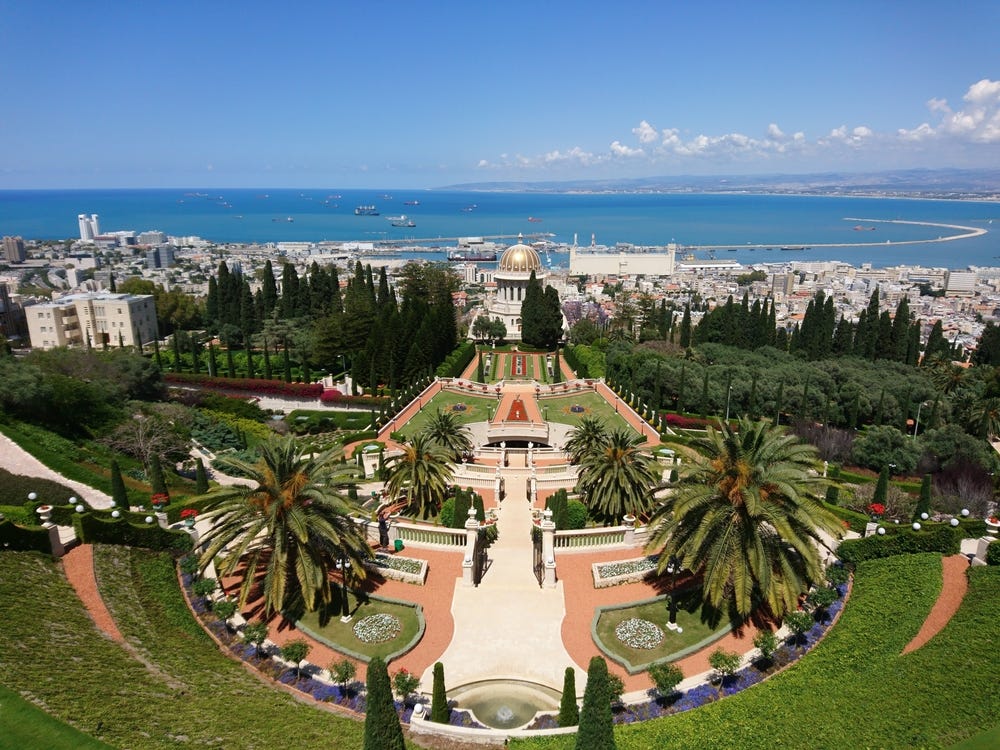
Israeli Bahá’ís marry, raise children, pass property, and worship without administrative interference of any kind. Across the border, in Egypt, the Bahá’í couple of forty-five years cannot register their marriage. In Iran, the country of the faith’s origin, Bahá’ís are imprisoned, executed, and stripped of property under formal state policy. Across the broader Islamic world, the same pattern repeats. The faith that the Islamic world has spent a century-and-a-half persecuting is the faith that the one Jewish state protects, honors, and shelters.
The West, which criticizes Israel for its alleged sins against minorities, has shown no equivalent interest in the actual condition of religious minorities in the Islamic states that surround Israel. This is a scandal.
Muhamad Saad Khairalla is a fellow at the Ideological Defense Institute.
What Is IDI ?
The most trusted source of information on the Middle East, Islam, and the ideological threats facing the West.
Subject-matter experts, former Muslims, Arab Christians, and Western thought leaders, coming together to equip policymakers to prevent destructive foreign ideas from being translated into law, restore confidence in the biblical principles that built the West by empowering the Church to reengage the public square, and provide the public with solid analysis to combat the confusion that is making the West vulnerable.