


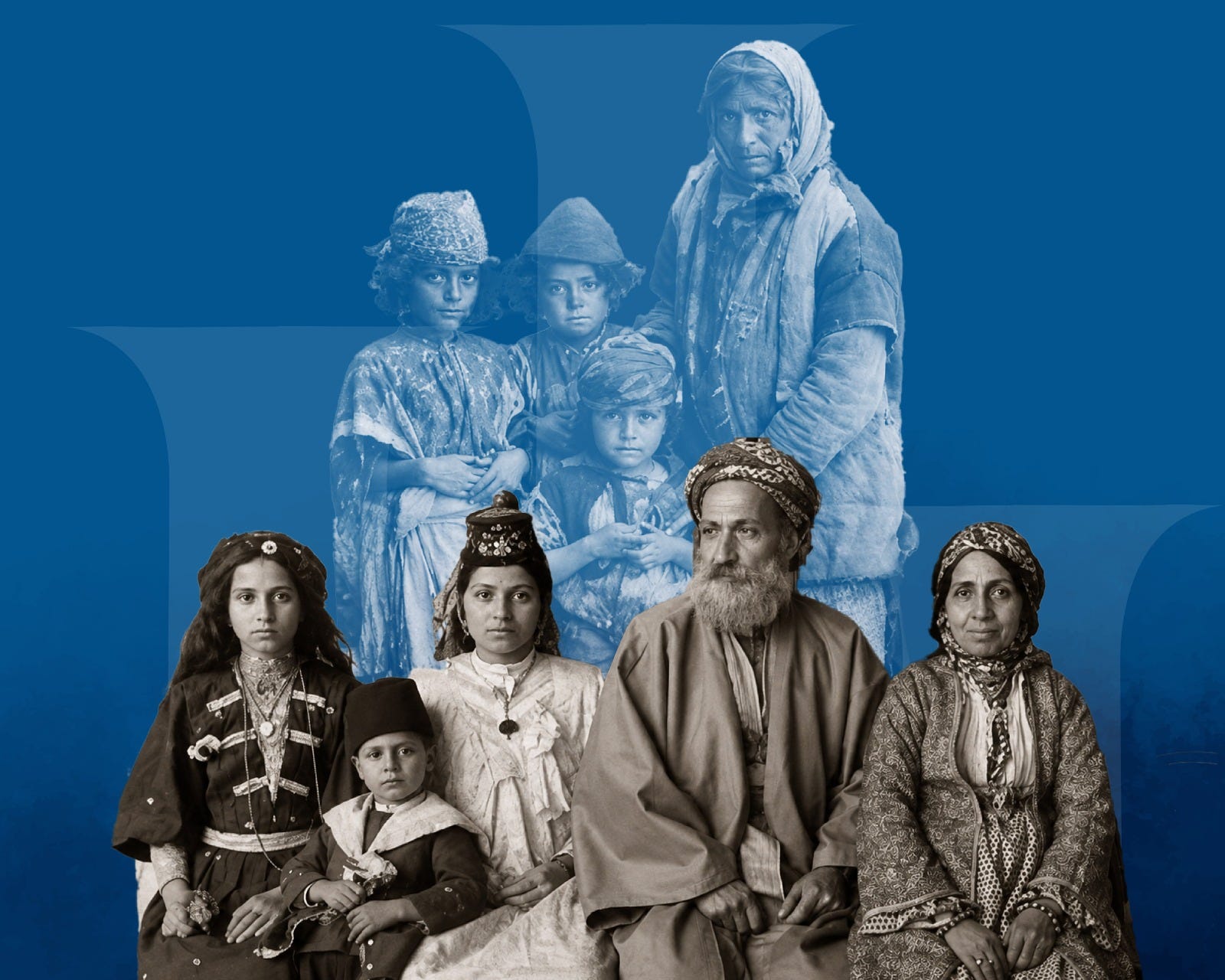
The Simele Massacre of 1933 in northern Iraq and the 1941 Farhud pogrom in Baghdad were separated by eight short years.
In August 1933, Assyrians were mercilessly murdered in the town of Simele and in the surrounding villages in the newly formed Kingdom of Iraq. Some Assyrian sources put the number of victims at 3,000. “The lawyer Raphael Lemkin coined the term ‘genocide’ and initiated the genocide convention after he became informed of the Christian genocide in 1915 and the Simele massacre in 1933.” On June 1-2, 1941, Baghdad’s ancient Jewish community was subjected to rape, looting and murder.
Although the victims belonged to two distinct identity groups, and the crimes committed unfolded under different political circumstances, both events revealed a recurring pattern; the indigenous Assyrians and the Jews of Baghdad whose history stretched back more than 2,500 years, had become conspirators, outsiders, and agents of the West. Before they could be murdered, they had to be transformed into the other, the demonized unbeliever whose eradication could be justified.
Here the unbeliever holds both a theological and a political designation: the minority whose loyalty is perpetually questioned, his mere existence then becomes conditional.
The timing of the massacre in Simele is significant. On May 30, 1932, Kingdom of Iraq signed a formal declaration, guaranteeing the protection of its minorities, thereby ending the British Mandate, securing its admission to the League of Nations on October 3, 1932. Article 2 of Declaration of Kingdom of Iraq promised full protection of life and liberty for all, regardless of “birth, nationality, language, race, or religion.” Article 4 stated that all Iraqi nationals would enjoy “same civil and political rights” in the land. Just over one year later, however, Iraqi parliament officially accused the Assyrians of treachery against the state, and subsequently the government deployed its military to confront and murder innocent civilians. The military also permitted some Kurdish tribes to engage in killing and pillaging of Assyrian villages.
The crisis that preceded the bloody events in Simele was rather complex. Assyrians displaced from Hakkari after WWI sought security in their ancient homeland, among their Assyrian kin in Iraq. During the war, Britain recruited Assyrians to fight against the Ottoman Empire, promising them independence in their own ancestral land in northern Mesopotamia. In the years that followed, many Assyrian men also served bravely in the British-commanded Levies. This military service was subsequently weaponized, adding to the conspiratorial claim that Assyrian Christians are in fact agents of British imperialism, deeming them as traitors to the newly formed Iraqi state. The very empire that had recruited Assyrians failed to keep its promise; to secure the safety of their devoted ally, causing this small nation to become the reason Iraqi nationalists declared them unworthy of trust.
A similar demonization strategy preceded the Farhud. Jews had lived in Mesopotamia for more than 2,500 years, and many regarded themselves as Iraqi nationals and patriots. The many contributions done by the Jewish community to the Arabic culture, commerce, literature, and public life were undeniable. Yet, during the 1930’s, the Iraqi Jews were increasingly linked to Britain, Zionism, and were implicated in an imagined Jewish conspiracy.
The assault on the Jews, an event which came to be known as the Farhud (looting in Arabic) erupted following the collapse of Rashid Ali al-Gaylani and his pro-Axis government. Nazi propaganda had already entered Iraq through the German diplomat, Fritz Grobba, who actively cultivated relationships with Iraqi nationalists, promoted anti-British, pro-German messaging, and supported the distribution of Nazi ideologies among the Iraqis. Hitler’s Mein Kampf was translated into Arabic, and its message was amplified in Arabic society. The United States Holocaust Memorial Museum (USHMM) identifies this propaganda as an important element which contributed to antisemitic atmosphere surrounding the Farhud.
The Farhud, however, cannot be attributed solely to Nazism. Iraqi militarism, anti-British nationalism, Arab resentment over policies in the British Mandate of Palestine, the longstanding religious prejudice against the Jews all converged with political instability and growing pro-Nazi sentiments in Iraq.
During the first two days of June 1941, Baghdad’s Jewish community found itself completely vulnerable and defenseless. Jews were dragged out of vehicles and were beaten to death, women were raped and their breasts were cut off, babies were bayonetted, elderly were badly beaten, and homes and businesses were systematically pillaged. These barbaric acts bore a disturbing resemblance to the violence inflicted on the Assyrians eight years earlier in the north part of the country. The number of Jews murdered stands at approximately 600, although the Jewish community of Baghdad believes the number was considerably higher. Much like the Simele, in Baghdad, some members of the military, elements of the police, and others joined the violence. These events show that participation in this brutality was a morally required act. In some cases, however, Muslim neighbors protected their Jewish friends from being raped and killed.
Simele and Farhud were not identical. Simele was a state-led military assault in northern Iraq. The Farhud was an urban pogrom unfolding amid governmental collapse. Nevertheless, both communities were accused of their connection and their allegiance to foreign powers. Conspiratorial propaganda and religious ideology directed against both groups shaped public opinion, recasting them as internal enemies. Plunder then rewarded participation: livestock, family jewels and heirlooms, homes, shops, lands, and other possessions were forcibly taken from the victims.
These events followed a recognizable anatomy. Assyrians and Jews within Muslim society were regarded as unbelievers. Their religious identities, and in case of the Assyrians, their ethnic identity, were used to place them outside the boundary of protection. Once demonized, they were no longer neighbors and equal citizens of the land, but as two groups that did not belong in the Muslim social order. The persecution therefore was not merely political; it also possessed an Islamic ideological dimension. Islamic conception of Christians and Jews as Kafir, helped create a condition through which violence against these minorities was permissible and actively encouraged.
This condition became explicit in Mosul in 2014, when the Islamic State offered Christians a brutal hierarchy of submission: conversion, payment of jizya, departure, or death. The Kingdom of Iraq in 1932 should not be equated to modern day ISIS, and the crimes of 1933 and 1941 cannot be projected onto the present, yet all of these events warn against what the West is faced with today.
The foundational truth about Judaism and Christianity is clear: that human being is created in the image of God. The anatomy of persecution begins with an ideology that trains its followers to kill and maim the unbeliever. In his Ethics and Infinity: Conversations with Phillipe Nemo, Emmanuel Levinas, the Jewish philosopher and Holocaust survivor writes, “The best way of encountering the Other is not even to notice the color of his eyes.” Until then, the anatomy of persecution against the unbeliever will continue to produce further atrocities.
Juliana Taimoorazy is a fellow at the Ideological Defense Institute