


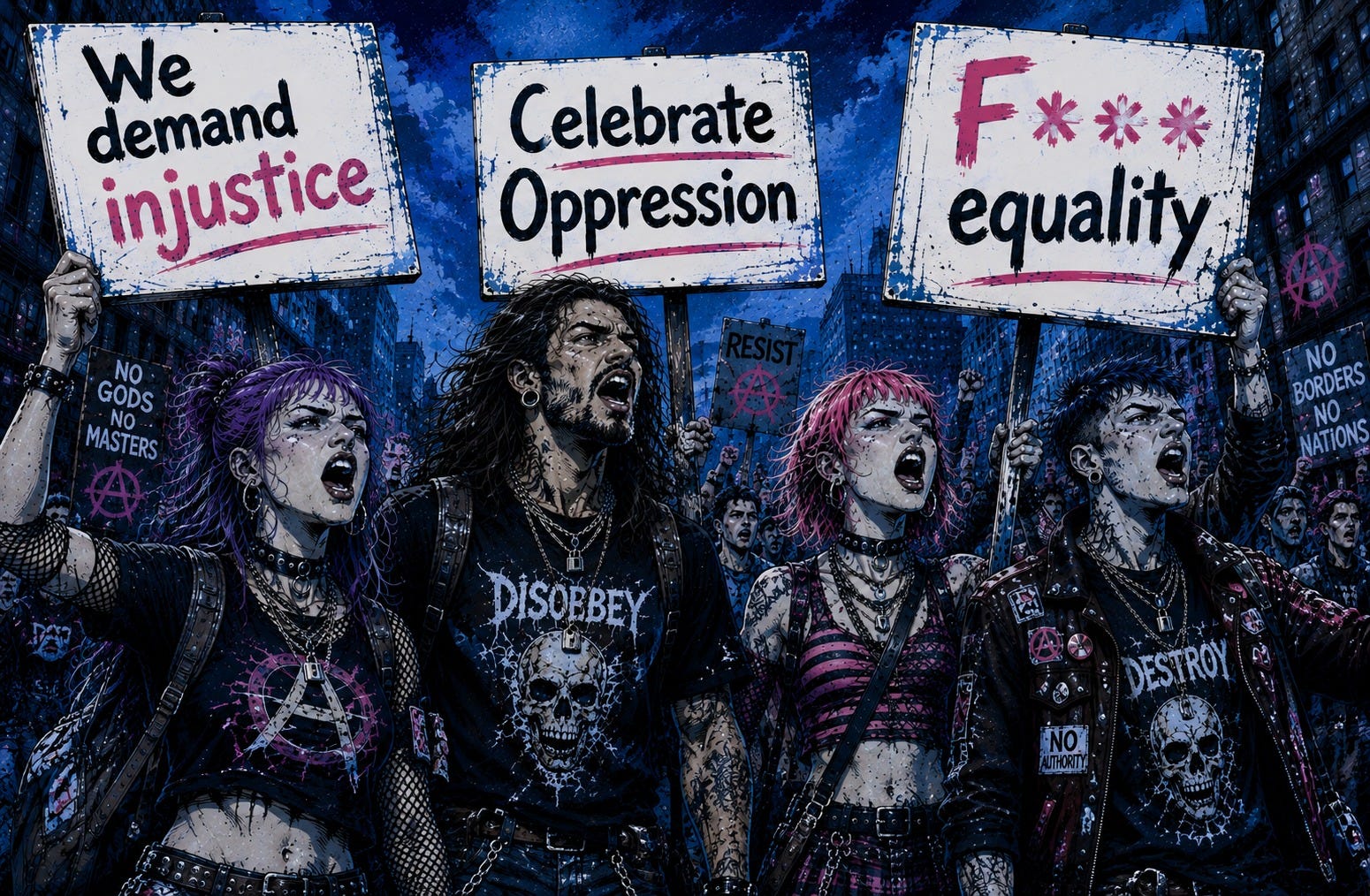
Justice, oppression, mercy, equality, liberation, concern for the poor and the stranger, peace, and human dignity may sound secular today, but they are biblical ideas. The left hijacked these principles and weaponized them, pushing them far beyond their original purpose.
In the Bible, these ideas belong to a moral order in which each principle is limited by others. Justice is joined to mercy, mercy assumes judgment, compassion does not cancel responsibility, equality does not erase every distinction. Care for the stranger does not abolish the nation, peace does not forbid self-defense.
Once these principles are removed from that moral order, they no longer serve their original purpose. They begin to serve the opposite.
The Bible has no patience for injustice, but biblical justice is not a political alliance with the weak against the strong. Exodus explicitly warns judges not to favor a poor man merely because he is poor. The biblical justice is based on conduct, not social position. Poverty does not make a person righteous, and wealth does not make a person guilty. A weak man can be wicked. A powerful man can be innocent.
The judge is supposed to ask what happened, who did wrong, and what justice requires. The left asks: who has power?
Once people are divided into oppressors and oppressed, the moral judgment follows the category. The oppressed are granted explanations that would never be offered to the people classified as powerful. Their violence is placed inside a history of colonialism, poverty, humiliation, racism, exclusion, or trauma. Their motives are studied, and their anger is contextualized. The victim may receive none of that attention if he belongs to the wrong group.
That is not biblical justice. It is precisely the kind of partiality the Bible warns against.
Mercy also changes when it is detached from the moral framework that gave it meaning. Biblical mercy assumes guilt. You forgive someone because there is something to forgive, you show mercy because punishment would otherwise be deserved. There is no contradiction between mercy and judgment because mercy only makes sense where judgment is real. Once guilt becomes uncomfortable, mercy becomes confused with the refusal to judge.
The criminal becomes a victim of circumstances, his upbringing must be considered, his poverty must be considered, his trauma, social environment, mental state, and disadvantages must all be considered. Then punishment itself starts to look immoral, the offender becomes the person society must understand.
The biblical basis for human equality gives every human life dignity before race, class, wealth, status, or political power enters the picture. A king and a beggar stand before the same Creator. No race possesses a higher grade of humanity.
But equality before God never meant sameness. Parent and child are not interchangeable, judge and defendant are not interchangeable, citizen and stranger are not interchangeable, innocent and guilty are not interchangeable. Equal worth does not mean equal role, equal ability, equal responsibility, or equal outcome.
If equality is the highest principle, what must be made equal? Income? Representation? Academic achievement? Wealth? Social status? Political power?
Equality means applying the same rules to everyone. For example, two job applicants should be judged by the same standards regardless of race or sex. But if you decide that equal treatment should also produce equal results, then when one group gets fewer jobs, admissions, promotions, or contracts, you may conclude that the system must be unfair. From there, you can justify treating groups differently to force the outcomes to become more equal.
So the paradox is: in the name of achieving equality, you can end up abandoning equal treatment. That is how institutions can discriminate by race in the name of ending discrimination by race.
The Bible repeatedly commands Israel to treat the stranger justly. But those commands appear inside a Torah that also assumes a distinct people, a land, borders, rulers, laws, inheritance, and obligations that Israelites owe specifically to one another.
The stranger must not be abused, that does not mean Israel must stop being Israel. The radical left keeps the first half and discards the second. Concern for the stranger becomes suspicion of the distinction between stranger and citizen, border enforcement becomes evidence of cruelty, a government’s preference for the welfare of its own citizens can be presented as morally backward.
The biblical principle was designed to restrain a nation from treating outsiders unjustly. It was not designed to make national existence itself morally suspect.
Peace is another biblical good that becomes dangerous when treated as absolute. The Hebrew prophets look forward to a world in which swords are beaten into plowshares. Christianity blesses peacemakers. Neither tradition glorifies war for its own sake, but neither teaches that peace must be preserved at any price.
A peace purchased by surrendering the innocent to an aggressor is not justice, a ceasefire that rewards the party willing to commit enough violence can become an incentive for more violence.
When peace becomes the highest good, the aggressor gains an advantage over the society that fears conflict. The aggressor attacks, the victim responds, then the pressure for restraint falls more heavily on the victim because the victim has the strength to exercise restraint, the stronger side becomes responsible for ending the conflict, while the weaker aggressor benefits from the fact that he has fewer options.
A principle meant to restrain unnecessary violence can then be used to restrain legitimate defense.
The Bible did not hand Western civilization a collection of isolated moral slogans. It gave it a moral order: Justice had to coexist with mercy, mercy had to coexist with judgment, compassion had to coexist with responsibility, equality had to coexist with real differences between people, care for the stranger had to coexist with duties toward one’s own household and people, peace had to coexist with the obligation to defend the innocent.
None of these principles was ultimate. God was, that is what held them together. Once God is removed, the principles remain, but nothing above them determines their proper place.
@DanBurmawy is the Chief Executive of the Ideological Defense Institute
War is Peace
Ignorance is Strength
Freedom is Slavery
It’s all there.
I fear that this is a mere ideological diatribe against the Left, which has the audacity to invoke so-called “biblical and moral values” in a biased manner. Ridiculous.