


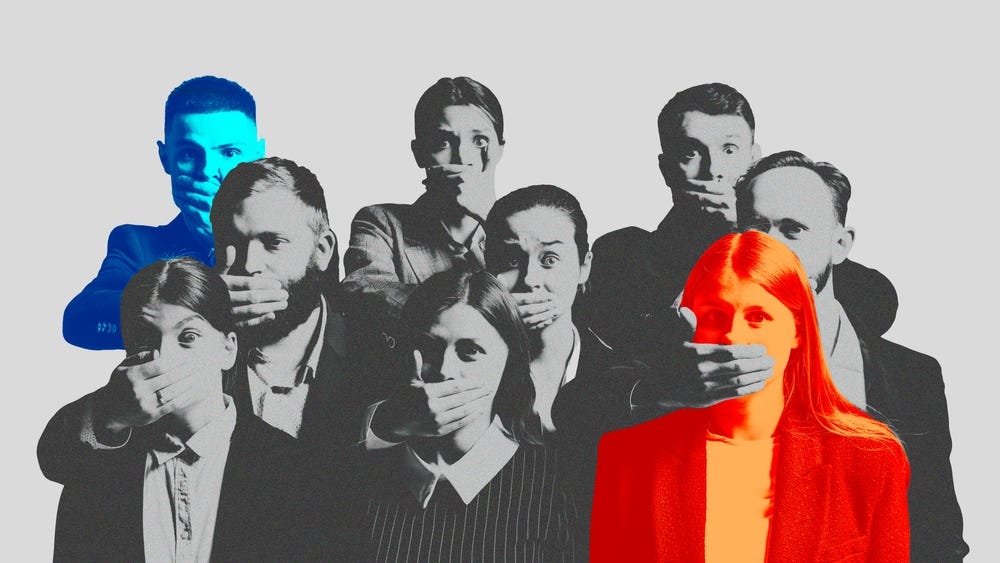
“Thou shalt not subject Islam, its Scripture, or its Prophet to historical-critical analysis. This is the first and the greatest commandment. And the second is like unto it: “It is Islamophobic so to do.”
In the first month of my doctoral studies at the University of Cambridge, I learned that the Faculty of Divinity observed these two great commandments with rigour and reverence.
Doctoral candidates were under no obligation to attend lectures, yet curiosity drew me into a first-year class on the Pentateuch. The professor, a distinguished Hebrew Bible scholar and a committed Christian, proceeded without hesitation to dismantle the traditional claim of Mosaic authorship. He treated the text like any other historical document: dissecting, dating, source-criticizing, and stripping it of its sacred aura with the rigor that has been routine in Western universities and seminaries since the Catholic priest Richard Simon published his Critical History of the Old Testament in 1685.
The Spanish-Jewish exegete Abraham Ibn Ezra had murmured his doubts about Mosaic authorship as early as the twelfth century. The Jewish philosopher Benedict Spinoza, steeped in the cool light of Cartesian rationalism, would later be hailed, together with Richard Simon, as the “Father of Biblical Criticism.” Even though I held to the inerrancy of Scripture, I wouldn’t trade academic freedom for all the gold of Ophir. The historical-critical barrage only fortified my faith in the Bible’s enduring truth and unassailable trustworthiness. It opened new horizons of theological interpretation and exciting avenues of historical exploration.
When I looked into Cambridge’s courses on Islam, I found that the contrast was absolute. What was applied to the Bible for centuries with academic freedom was, in the case of Islam, treated as sacrilege. The lecturer in the Faculty of Divinity was a white convert to Islam. He did not even possess a doctorate. He had few peer-reviewed articles or academic books to his credit. He taught Islam with the fervor of an apologist and with the deference of a Sunday School preparing children for their First Holy Communion.
With a chill, I grasped the gravity of the threat to academic freedom only after I assumed the directorship of the master’s programme at the London School of Theology. Doctoral students from America, Australia, and across Europe confided that universities across the West had cautioned them: doctoral supervisors would not entertain thesis proposals on sensitive matters—most notably the textual criticism of the Qur’an—lest they be accused of Islamophobia. Publishing houses and academic journals would publish only “safe” monographs or peer-reviewed articles on Islam. After all, who wants to be the target of a suicide bomber or a knife-wielding jihadi shouting “Allah hu Akbar?”
Scholars Acknowledge the Islamophobia-driven Academic Appeasement of Islam
In the cloister of modern Qur’anic scholarship, Stephen Shoemaker’s groundbreaking Creating the Qur’an: A Historical Study exposes a striking vacuum: he concedes that the entire process of the text’s production has remained “underresearched from a critical perspective,” because “modern scholarship on the Qur’an, with some notable exceptions, has been largely governed by traditional Islamic views of the Qur’an.” Angelika Neuwirth, Professor of Qur’anic studies at Berlin’s Free University, voices a sharper grievance, deploring the university’s obeisance to Islamic orthodoxy and the resulting “failure of Qur’anic studies to locate the Qur’an at eye level with the other Semitic scriptures.” Wilfred Cantwell Smith, the founder of the Institute of Islamic Studies at McGill University, is partly to blame. He maintained that any valid understanding of the Qur’an required a scholar to approach the text as a believing Muslim would, seeking insight from within the faith rather than from the vantage of historical criticism.
Islamophobia, that modern Frankenstein, has slipped its chains and now stalks our universities, extinguishing academic freedom and imposing a draconian regime of self-censorship upon the study of Islam. Instead of allowing a level playing field, Islam is singled out for special treatment and is handled with academic kid gloves. Most Qur’an scholars still rely heavily on the historical framework supplied by the later Islamic tradition itself (sīra, hadith, and traditional accounts of compilation under Abū Bakr andʿUthmān). The result, Shoemaker argues, is that “most Western scholarship on the Qur’an serves to reinscribe, rather than challenge, the traditional Islamic narrative of the Qur’an’s formation.” As a biblical scholar, I would contend that even Shoemaker’s research is less methodologically aggressive than the equivalent work on the Bible.
The asymmetry leaves Islamic studies insulated from the methods that transformed the study of Christianity and Judaism and paved the way for liberal tolerance. When the academy treats one religion as uniquely protected from critical investigation, it weakens the principle of equal standards. It erodes confidence in universities as a neutral venue of inquiry. The cosmetic facelift of Islam by so-called Islamic scholars leaves the West less prepared to understand and respond to the onslaught of Islamic hegemony.
‘Islamaphobia’ is the Methodology Governing Islamic Studies
When I co-taught Islam at Liverpool Hope University with my colleague Ron Geaves, a brilliant scholar and gentleman, I began my course with a set of maps showing students how Islamic conquests ethnically cleansed entire countries of Christianity and Zoroastrianism. My colleague was more circumspect and focused on a more nuanced descriptive discourse in his lectures. I still treasure his book Aspects of Islam for its masterful, but cautiously critical, sweep of Islamic theology and history. Muslim students would occasionally dangle the “Islamophobia” threat, accusing me of violating their religious sensibilities. I responded by telling them that I treated Christianity and the Bible no differently than I did Islam and the Qur’an in my lectures.
Other academics and students haven’t been so fortunate. “In almost no class was I ever required to delve deep into Islamic sacred tradition, especially if it involved challenging Islamic beliefs,” writes Andrew Bieszad, recollecting his time at Hartford Seminary in Connecticut. “I spent much time studying Islam on my own and I could have just educated myself instead of spending three years defending myself against accusations of bigotry, ‘Islamophobia,’ and ignorance simply because I refused to submit intellectually to Islamic belief without question or disagreement,” observes Bieszad.
Bieszad, who has a master’s degree in Islamic Studies and Christian-Muslim Relations from this Islamo-Correct institution, warns that the situation is the worst in programs funded by Muslim countries like Saudi Arabia, “because academic institutions are unwilling to allow criticism of Islam lest it jeopardize endowments.”
After completing my doctorate, I was one of three candidates shortlisted to head the new program of Abrahamic Religions at Cambridge University. Later, two members of the interviewing panel told me I didn’t get the job even though the panel voted almost unanimously for me. Saudi Arabia was funding the program. My call for methodological rigor when investigating Islam would be construed as “Islamophobic” by the benefactors.
Islamophobic-driven Deference Leads to the ‘Islamization of Knowledge’
In June, Dr. Florence Bergeaud-Blackler, my friend and colleague at the Transatlantic Institute for the Study of Contemporary Ideologies (TISCI), won a legal victory against Iman El Feki, a female Muslim PhD candidate at the University of Strasbourg, who sued her for defamation over a post on X calling out the Islamist infiltration of French universities. Bergeaud-Blackler is an anthropologist and a world-renowned expert on the Muslim Brotherhood, who has been living under round-the-clock police protection after her book The Muslim Brotherhood and Its Networks: The Investigation was published in 2023.
Strasbourg University president, Frédérique Berrod, assured El Feki of the “institution’s support in his matter.” Le Journal du Dimanche reported that the university had allocated around 1,800 euros in public funds to El Feki’s legal action, even though she was not eligible for it.
“Do not think this is an isolated case. Brotherhood ideology has gradually taken root in universities over the past thirty years,” Bergeaud-Blackler tweeted. “It plays a growing role in shaping the study of contemporary Islam and controls the editorial boards of journals in which no critical approach is allowed.” “This is called ‘the Islamisation of knowledge,’ and it is a Muslim Brotherhood project,” she added.
Professor Nasr Hamid Abu Zayd met with a similar fate. He was an Egyptian scholar of Arabic literature and Islamic studies who applied literary criticism, discourse analysis, and historical-contextual methods to the Qur’an. He was denied promotion, declared an apostate by an Egyptian court, forcibly “divorced” from his wife, subjected to death threats, and driven into exile, even though he was a practicing Muslim who saw his methods as continuing rationalist strands within the Islamic tradition.
Mahmoud Muhammad Taha, a Sudanese scholar who argued for reversing the Islamic doctrine of naskh (abrogation) by maintaining that the Meccan verses should be made normative as they are more universal and egalitarian, was arrested, tried, convicted of apostasy, heresy, opposing Islamic law, and refusing to recant. In 1985, he was publicly hanged in Kober Prison in Khartoum under President Gaafar Nimeiry’s regime, which had imposed Sharia law.
The ramifications of academic acquiescence to Islamophobia are grave: students are being offered a sanitized treatment of the Qur’an and a revisionist version of Islamic history. The historical reliability of the hadith remains unchallenged; the treatment of apostates and minorities, the status of women, and the jihadi expansion of the early caliphates remain underexplored or are framed in apologetic terms. The study of reform movements is excluded.
Optimists often wonder if Islam will tread the same path of critical investigation as Christianity. The critical study of texts pioneered by Renaissance humanists like Lorenzo Valla’s lit the fuse for the Reformation. Valla’s most famous work, De falso credita et ementita Constantini donatione declamatio (c. 1440), used linguistic and historical analysis to show that the Donation of Constantine—a document long used to justify papal temporal power—was a forgery. De falso was first printed in 1517 (the same year as Luther’s 95 Theses) and circulated widely among reformers. The Catholic priest Desiderius Erasmus’ critical edition of the Greek New Testament played a pivotal role in Martin Luther’s rediscovery of the doctrines of sola fide and sola gratia. “Erasmus laid the egg that Luther hatched” is a popular jibe that captures the link between humanist scholarship and the Reformation.
Tragically, the West is witnessing the reversal of the Renaissance, the Reformation, and the Enlightenment in the academic study of Islam. “I fear that as orthodox Islam takes deeper root in Islamic studies in America and Europe, more institutions will come to resemble Hartford Seminary until eventually their scholarship is swallowed up by submission to Islamic orthodoxy,” Bieszad mourns. “Besides the heckler’s veto and the assassin’s veto, we have the fanatic’s veto, and it reaches across frontiers,” warns Timothy Garten Ash in his bestselling Free Speech: Ten Principles for a Connected World.
If Ash walks into the lecture halls of Islamic studies, he will encounter a fourth and, in its way, the most insidious: the professor’s veto, exercised not by the mob outside the gates but by those who already hold the keys.
Canon, the diagnosis is exact. The academy that has spent centuries applying historical-critical method to the Pentateuch, the New Testament, and every other sacred text treats the same method applied to the Qur’an and the early Islamic sources as a category error. The term that enforces the exception is “Islamophobia.” It is not a descriptive category. It is a prohibition. It converts ordinary historical inquiry into a moral offense and thereby protects one particular claim to revelation from the standards applied to every other claim.
There is no such thing as Islamophobia in the sense the term is used. There is only the refusal to grant the Apostasy of Mohammed the unique immunity it demands. Islam is not a religion in the ordinary sense. It is the system that presents itself as the final and superseding revelation, rejects the prior covenant, and has historically treated the refusal of that claim as a political and military problem. The academic institutions that now decline to examine its foundational texts with the same tools they use on the Bible are not practicing neutrality. They are practicing submission to the demand that one particular text remain outside the methods that dismantled every other sacred claim in the West.
The pattern is already visible. Supervisors decline proposals on the textual history of the Qur’an. Journals prefer the traditional narrative. Funding from states that treat apostasy as a capital offense shapes what can be said. The result is not balanced scholarship. It is the progressive insulation of one system from the critical standards that once applied to all. The residual capacity for ordinary historical method still exists. It is simply no longer applied where the consequences are highest. The Father remains in charge of the larger sequence. The present duty is simply to refuse the prohibition and keep the method available.
Semper Fi Brother and have a Blessed day Sir 🙏
Just another reason to be an Islamophobe.
The Islam religion says criticizing the Q'aran and Mohammed is not allowed. So by definition, any criticism is Islamophobia.
Bottom line, Islam is not compatible with traditional western liberal values. I'm Danish. The Danes already found out what happens when you put out a cartoon of Mohammed.
My guess is universities may be concerned about real Jihad like backlash if they criticize Mohammed or the Q'aran.