


When you walk into the grand Casino du Liban in Jounieh, you are immediately transported back to a lost era. The walls of the entrance hall and main galleries are lined with large black-and-white photographs from the 1960s and early 1970s. There is President Camille Chamoun greeting foreign dignitaries; Charles Helou smiling beside international statesmen; Fairuz performing at the height of her fame; Hollywood stars and European royalty mingling with Lebanese elites at lavish parties; images of a confident, glamorous Beirut filled with elegance, possibility, and modernity. As you stand there, it is almost impossible not to pause and ask: What happened to Lebanon?
In the early 1960s, Israel’s Ministry of Tourism dispatched a high-level delegation to New York. Their mission was to sit down with one of America’s most prestigious advertising agencies and figure out how to transform Tel Aviv into another Beirut on the Mediterranean.
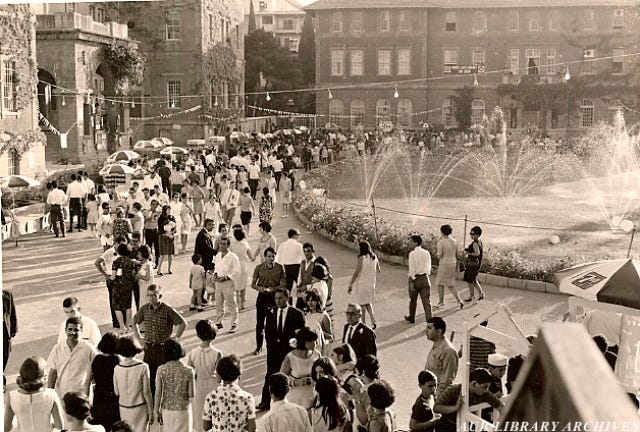
At that moment, Beirut stood as the undisputed crown jewel of the Middle East, a city routinely called “the Paris of the Orient.” In the 1960s, it was the financial capital of the Arab world. Gulf oil money flowed through its sophisticated banks, making Lebanon the region’s premier financial hub. It was the medical capital, home to the finest hospitals and specialist clinics, attracting patients from across the Middle East and beyond. It was the educational capital, anchored by the American University of Beirut, an institution so renowned that it was often described as the Harvard of the Middle East. Its campus, perched on a hill overlooking the Mediterranean, produced generations of doctors, lawyers, engineers, and intellectuals who would go on to shape the region.
Beirut’s streets hummed with cosmopolitan energy. Elegant French architecture lined the Corniche. Nightclubs, theaters, and cafés stayed open late. Fashion houses, art galleries, and publishing firms flourished. Tourists from Europe and the Gulf mingled with local elites. Lebanon’s economy boomed. Its currency, the Lebanese pound, was one of the strongest in the developing world. Its press was the freest in the Arab region. Its universities attracted the brightest minds. For a brief, glittering window, Beirut represented what the Middle East could have been: prosperous, open, and modern.
Lebanon’s Maronite Christians, along with substantial Greek Orthodox, Melkite Catholic, and Protestant communities, had built and sustained the country’s most vital institutions. They had established the banking system, and nurtured the leading educational centers. They had built the hospitals that earned Lebanon its reputation, and cultivated a legal and political culture that allowed for greater freedom, pluralism, and economic dynamism than anywhere else in the Arab Middle East.
Wherever historic Christianity has taken root in the Middle East, whether among the Maronites of Lebanon, the Assyrians of Iraq and Syria, the Copts of Egypt, or the Armenians of the Levant, Christians have consistently built.
The Decline
While Lebanese Christians poured their energy into building, large segments of the Muslim population remained preoccupied with religiously motivated causes that had little to do with Lebanon. For many Muslims, Lebanon was never an end in itself. It was viewed as part of a larger Islamic ummah. The ultimate loyalty was not to the Lebanese republic but to the broader struggle against perceived enemies of Islam, chief among them the emerging Jewish state.
When the Arab-Israeli War broke out following Israel’s declaration of independence, Lebanon was under strong pressure from the Arab League to join the military coalition against the new Jewish state. Christian leaders, particularly the Maronites, were deeply reluctant. Many saw no strategic reason for Lebanon, a small, fragile, multi-confessional country, to risk its stability in a distant ideological conflict. Yet the Muslim political class, backed by pan-Arab sentiment and pressure from Cairo and Damascus, insisted that Lebanon must participate.
In the end, Lebanon sent only a token force, a single infantry battalion that saw limited action, but the decision to join the Arab coalition, however symbolic, marked the first time the young republic subordinated its own interests to a broader Islamic cause. Christian politicians, wary of being labeled traitors to the Arab nation, acquiesced. It was the beginning of a pattern that would repeat for decades: Christians compromising their own vision of Lebanon in the name of national unity, while Muslim leaders treated that unity as a tool to advance larger ideological objectives.
The pattern accelerated dramatically in the 1950s and 1960s under the influence of Egypt’s Gamal Abdel Nasser. Nasser’s pan-Arab nationalism presented itself as a secular, modernizing ideology. In reality, it served as a powerful vehicle for reasserting Islamic identity and political goals under a more palatable banner. Nasser’s radio broadcasts, his calls for Arab unity, and his fiery anti-Western and anti-Israel rhetoric resonated deeply with Lebanon’s Muslim population. For many Muslims, Nasser’s movement was not merely political; it tapped into long-standing religious sentiments about restoring Muslim power and dignity against historical enemies.
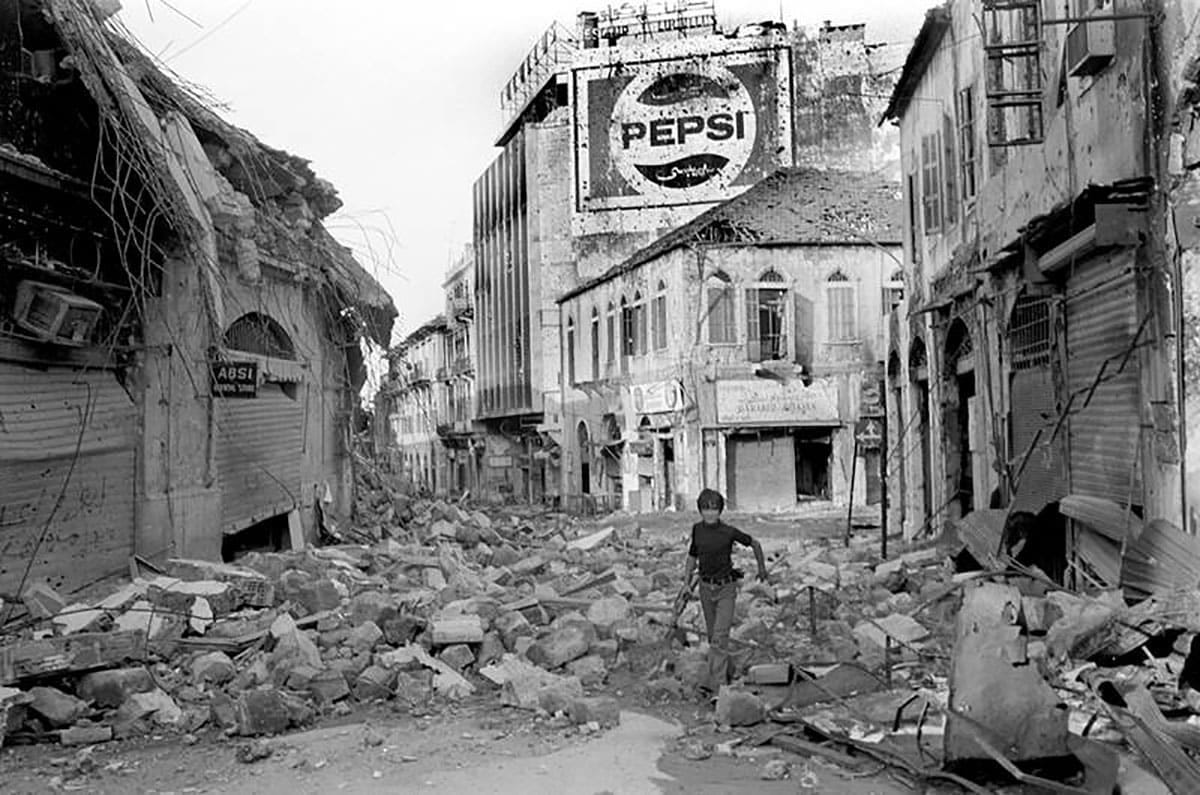
Christian leaders initially tried to accommodate this wave. They hoped Arab nationalism could be domesticated within Lebanon’s confessional system. Instead, it systematically undermined Christian political dominance. In the 1958 crisis, Muslim demands for greater power and closer alignment with Nasser’s United Arab Republic nearly tore the country apart. President Camille Chamoun, a Maronite, was forced to call in American Marines to restore order.
By the late 1960s, the arrival of armed Palestinian militias, the fedayeen of the PLO and other factions, and under intense pressure from Nasser’s Egypt and radical Arab states, the Lebanese government signed the Cairo Agreement. This infamous pact effectively granted the PLO extraterritorial rights inside Lebanon. Palestinian camps became sovereign enclaves beyond Lebanese army control. The south of the country was transformed into “Fatahland”, a de facto launching pad for cross-border attacks on Israel.
Lebanese Christians watched as their country was turned into a base for a foreign guerrilla war. The Palestinian cause was never really about Palestinian statehood in the eyes of Muslims; it was part of the larger Islamic struggle against the “Zionist entity.” Once again, Muslim leaders in Lebanon pressured the Christian political class to accept this arrangement in the name of Arab solidarity. Christians, still clinging to the dream of coexistence, compromised. The result was catastrophic. The PLO’s presence radicalized Lebanese Muslims, destabilized the south, and provoked Israeli retaliation. What began as “tolerance” for a supposedly secular nationalist cause became the vehicle for embedding a religiously driven war inside Lebanon itself.
After Israel’s 1982 invasion forced the PLO’s expulsion from Beirut and southern Lebanon, the underlying dynamic did not disappear. It simply mutated. In the power vacuum left by the departing Palestinians, a new force emerged: Hezbollah inherited the mantle of “resistance.” Unlike the PLO’s secular façade, Hezbollah presented its war against Israel not as jihad but as legitimate “national resistance”, a cause that even some secular Lebanese could be pressured to support.
Once again, parts of the Lebanese political class, including some Christians, were drawn into accommodating or at least not confronting this new actor. Hezbollah gradually entrenched itself in Lebanon’s institutions, built a parallel state in the south and the Shiite suburbs, and used the country’s resources, territory, and political system to pursue its religiously motivated objectives.
The pattern that destroyed Lebanon was always the same: Christians, driven by a genuine desire to build and coexist, repeatedly compromised with groups whose ultimate commitments were theological and expansionist. Muslims, whether under the banner of Arab nationalism or Palestinian liberation or “resistance,” consistently subordinated Lebanon’s national interest to a larger civilizational and religious struggle, with Israel as the central symbol of that struggle. Each concession was sold as pragmatism or unity. Each time, it further eroded the Christian-built foundations of the state.
The New Lebanon
The Christian-built West is being systematically transformed into the new Lebanon. What is happening today is a coherent process in which Islamic political causes, rebranded as secular and humanitarian struggles, have been granted entry into the very institutions Christians once created. The result is a coalition of convenience in which disparate groups, each with its own agenda, have converged on a common project: using the West as a launching pad against Israel while simultaneously hollowing out the West itself.
What was once openly declared as jihad now travels under more palatable banners: “Palestinian rights,” “anti-colonial resistance,” “global justice,” “intersectional liberation,” and “human rights.” These slogans allow Islamic supremacist goals to infiltrate Western universities, media, NGOs, political parties, and even churches without triggering the instinctive alarm that would have been raised in earlier generations. The cause remains the same, the theological and civilizational rejection of Jewish sovereignty and, by extension, of the Christian West that supports it, but the packaging has been updated for Western consumption.
This rebranding has proven extraordinarily effective at recruiting non-Muslim allies who would never openly embrace Islamic theology. The coalition is broad and seemingly contradictory, yet it holds together because each partner gains something vital from the weakening of the existing order.

Younger Westerners, particularly those educated in the last three decades, have been steeped in a narrative of civilizational guilt. They have been taught that their own societies are irredeemably racist, colonial, and oppressive. For them, aligning with the “oppressed”, currently embodied in the Palestinian cause, offers moral absolution and a sense of purpose. They do not see themselves as participants in a religious war; they see themselves as fighting for justice. Their hatred is not of Jews per se, but of the civilization that produced them. Israel becomes the perfect symbol of everything they have been conditioned to despise: Western success, military strength, and unapologetic particularism.
Traditional antisemites, both on the far right and among certain segments of the old left, have discovered in anti-Zionism a socially acceptable vehicle for their ancient hatred. What was once confined to fringe conspiracy theories or outright neo-Nazism can now be expressed in the respectable language of human rights reports, academic conferences, and street protests. Anti-Zionism has become the acceptable modern form of antisemitism, one that allows respectable people to traffic in the same tropes their grandparents would have recognized.
Communists and hard-left ideologues see in the Palestinian cause a continuation of their historic project. For them, Israel is the last outpost of Western capitalism and imperialism in the Middle East. Bringing it down is a necessary step toward dismantling the broader liberal order. They do not care about Islamic theology; they care about power. The alliance with Muslims is purely tactical, useful idiots on both sides, each believing they will ultimately prevail.
Globalists and one-world-order advocates view strong nation-states with distinct civilizational identities as obstacles. National sovereignty, cultural particularism, and the Judeo-Christian moral framework that undergirds the West stand in the way of their vision of borderless governance and homogenized humanity. By eroding the West’s confidence in its own foundations, they accelerate the transfer of power to supranational institutions and global norms. The Palestinian cause, with its universalist framing, serves as a useful battering ram against the particular.
And then there are the Muslims themselves, those operating from an explicitly Islamic framework. For them, the cause is theological. From the river to the sea is not a slogan about borders; it is a statement of eschatological intent. They are not seeking a two-state solution. They are advancing the same civilizational project that motivated the PLO, Nasserism, and now Hezbollah and Hamas: the eventual submission of the West to Islamic dominance, with Israel as the immediate and symbolic obstacle.
What makes this coalition so dangerous is that it is not coordinated from a single command center. It does not need to be. Each group brings its own institutional power, cultural capital, and demographic weight. The left controls the universities and much of the media. The globalists dominate international organizations and large foundations. Muslims provide the foot soldiers, the demographic momentum, and the uncompromising ideological core. Together, they have achieved what no single faction could have managed alone: the capture of Western moral language, the weaponization of Western institutions against the Jewish state, and the gradual erosion of the West’s will to defend itself.
The process mirrors Lebanon with eerie precision. In Lebanon, Christians believed they could contain and domesticate the forces arrayed against them. They compromised again and again in the name of unity. Each concession further empowered the very groups that ultimately destroyed the state they had built. Today, the West is making the identical mistake, only the stakes are global. The same tolerance that allowed Palestinian militias to turn southern Lebanon into “Fatahland” now allows ideological enclaves to function as bases for a larger civilizational assault.
The destruction is not coming through tanks and artillery this time. It is coming through lawfare, demographic transformation, institutional capture, and the steady hollowing out of cultural self-confidence. The West is being turned into a platform, a new launching pad, from which the war against Israel, and ultimately against the Christian civilizational order that made the modern West possible, can be waged more effectively than ever before.
And like Lebanon before it, the West is financing its own demise. Its universities train the activists who march against it. Its media amplifies the narratives that delegitimize it. Its legal systems are being used to shield those who seek its replacement. Its political class, terrified of being called intolerant, continues to extend the very tolerance that is being weaponized against it.
The Christian-built West is repeating Lebanon’s error on a civilizational scale. The question is how far it will be allowed to go before the realization comes, too late, as it did in Beirut.
Danny Burmawi is the chief executive of the Ideological Defense Institute
Phenomenal piece. Even here in Cape Town, a million miles away, I am seeing my once English, Christian suburb (where we used to go carol singing as kids) being replaced. First there was the distant, 'exotic' sound of the call of the muezzin (before we knew what it meant), followed by a slow 'hijra'; until suddenly, one day, your sense of place is gone, replaced by hijabs, burkas, indignant looking young men parking their kitsch cars illegally on curbs, and at stop streets. And always the slow creep of concrete and the eradication of natural beauty. It's difficult to imagine my place of birth, childhood, my teens no longer existing - that one day it will be lost forever, as though my family and me - and our neighbours, our community - never existed at all.
Great article. Unfortunately, from Christmas markets to local celebrations, we are seeing Islam creep in and destroy our world. Our leaders did not learn from Lebanon.